
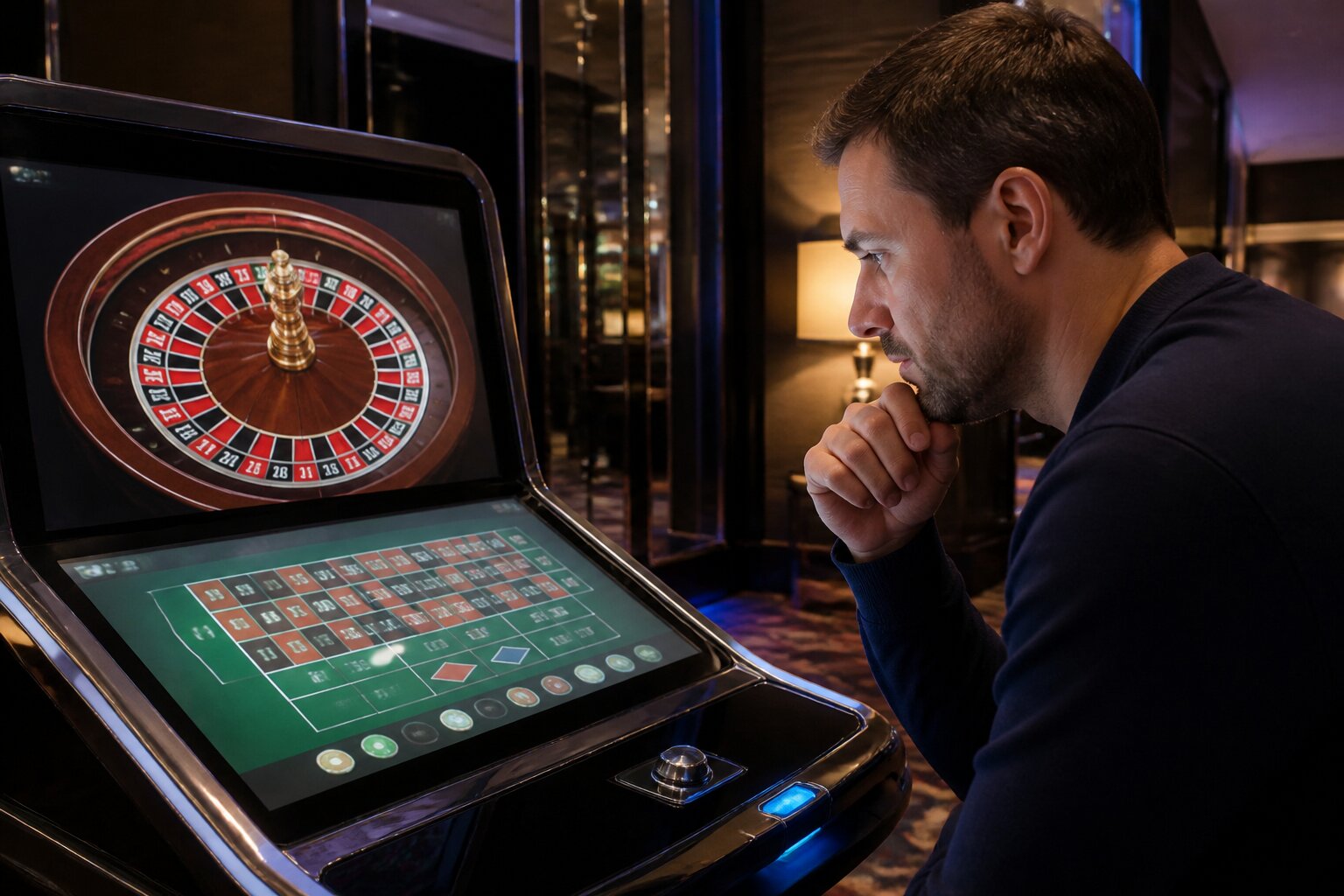
Ever watched the ball spin on a roulette machine in your local bookies and wondered if the outcome is genuinely random or if the odds might be stacked against you? You’re not alone. Roulette machines, often called Fixed Odds Betting Terminals (FOBTs), appear in many betting shops and casinos, and players frequently question how fair the games really are.
It’s easy to see why suspicions arise. You place a bet, the ball spins, and a run of losses can feel unnerving. That sense of unease often leads people to wonder whether the machine could be manipulated. This article explains how these machines work, how they are tested and regulated, and what to look for to judge whether a machine is operating fairly.
Read on to get a clear picture of the technology, the safeguards in place, and the practical signs that a roulette terminal is being run properly.
How Do Roulette Machines in Bookmakers Work?
Roulette machines in bookmakers, commonly called touch bet or electronic roulette terminals, present the familiar roulette layout on a touchscreen. Players choose chip sizes and bet positions on the virtual table, confirm their choices, and press a button to generate a result. There is no physical wheel or dealer; the outcome is produced by the machine’s internal software.
Behind the scenes, a Random Number Generator (RNG) decides each result. The RNG continually produces numbers at high speed, and the number in place at the moment the player confirms a spin maps to a particular slot on the virtual wheel. The visual animation of the ball and wheel is a representation of that result, with credits added or deducted from the player’s balance automatically.
The speed and automated nature of the game deliver a fast experience similar to a live table, but every spin is governed by the same electronic process. Next, we’ll look at how independent testing verifies that this process is actually fair and tamper-proof.
Are Electronic Roulette Machines Independently Tested?
Before any machine can be used in a betting shop it must pass independent testing to confirm that the RNG and other software behave correctly. Approved test houses carry out technical audits, run large-scale simulations and check the machine for vulnerabilities that might allow tampering or incorrect payouts.
These audits include long simulation runs that check outcomes against the expected statistical distribution for roulette, and they verify that the published odds and payout structure are correctly implemented. If a machine fails to meet the required standards it will not be certified for use.
Manufacturers and operators must keep machines sealed and subject to regular re-testing, so independent verification is not a one-off step but an ongoing requirement to keep machines licensed and available to players. With that foundation, it helps to understand exactly how the RNG produces each spin’s outcome.
Understanding Random Number Generators and Fairness
The Random Number Generator is the component that determines each result on an electronic roulette machine. It runs continuously and emits a stream of numbers at a very high rate. When a player confirms a spin the machine takes the number currently being produced and maps it to one of the possible roulette outcomes.
Because the RNG is always cycling numbers, the result cannot be predicted in advance or influenced by previous spins. Each spin’s outcome is statistically independent, meaning the sequence of results follows the same distribution over the long term as a physical roulette wheel would.
RNG algorithms and their implementations are examined by testing agencies to ensure they meet accepted standards for randomness and impartiality. Those tests look both at the algorithm itself and at how it is embedded in the machine, confirming it cannot be altered by the operator or external parties. Understanding this mechanism helps explain why apparent streaks or unusual runs of results are part of normal statistical variation rather than evidence of manipulation.
Common Myths About Fixed Roulette Machines
Electronic roulette machines generate a lot of myths. These often stem from how people remember unusual sequences or from misunderstandings about probability and game mechanics.
Why Do Some Players Believe Machines Are Fixed?
Players commonly explain their experiences with a few recurring ideas. Losing runs can feel personal when you are the one who is betting, so it’s natural to suspect something unfair. Patterns that seem unlikely, such as the same colour repeating several times, draw attention and feel suspicious even though such sequences occur in any random process. There are also misconceptions about machines tracking player behaviour or making payouts at their own discretion; in reality, outcomes are generated independently and payouts are determined by the programmed rules.
A variety of anecdotes and misinformation spread online also feed these beliefs. Stories from friends or forums are emotionally compelling, but they are not the same as technical evidence.
Are Payouts Manipulated by Bookies?
Payout ratios for bet types, such as 35 to 1 for a single number, are part of the game design and must match the published rules. Regulations require that the software implements these payouts correctly and that independent tests verify the long-term return to player. Operators do not have the ability to alter those fundamental payout ratios on a whim or to control individual outcomes.
Approved machines are subjected to the audits described earlier, and any discrepancy between advertised and actual behaviour would prevent certification. With the technical controls and regulatory checks in place, the system is structured to prevent casual modification of payout behaviour.
Legal and Regulatory Oversight in the UK
The UK regulatory framework imposes strict controls on electronic gambling machines. The relevant legislation requires that games are fair and that outcomes are determined by approved randomised technology. Oversight includes regular audits, technical standards for equipment, and requirements for clear information to be presented to players.
Operators must display the machine’s Return to Player, or RTP, which shows the long-term average payback percentage. This figure helps players understand how the game behaves over many spins. Operators are also required to carry out age verification at the point of sale and to maintain records that regulators can inspect.
Regulatory action is possible if machines are found not to meet standards; sanctions range from fines to licence revocations. Knowing these safeguards helps explain why machines found on the high street are subject to continuous oversight rather than operating unchecked. With regulation and testing explained, the next section outlines practical signs that a machine is likely being well maintained and run properly.
Signs of a Fair Roulette Machine
There are several visible indicators that a roulette terminal is operating within expected standards:
- Displayed licence information confirming the operator is regulated.
- Evidence of independent test certification or labelling that a machine has been audited.
- Clearly shown RTP percentage so players can see the long-term payback metric.
- On-screen or nearby published game rules, bet types and payout tables that match expected values.
- Clear details for customer support or how to raise concerns with the operator.
- Staff-enforced age verification, with identification checks where appropriate.
These signs do not prove perfection, but together they provide practical reassurance that a machine is subject to the checks and controls required by regulators. If you see several of these indicators, the machine is more likely to be operating as intended.
Explore Casino Games at UK Online Slots
We welcome you to enjoy casino gaming with us at UK Online Slots. Our easy-going site is designed to make your experience straightforward and enjoyable every step of the way.
Setting up your account is a breeze: simply create an account, make a deposit and you’ll be ready to explore our games whenever you choose. We look forward to seeing you at the tables.
**The information provided in this blog is intended for educational purposes and should not be construed as betting advice or a guarantee of success. Always gamble responsibly.