
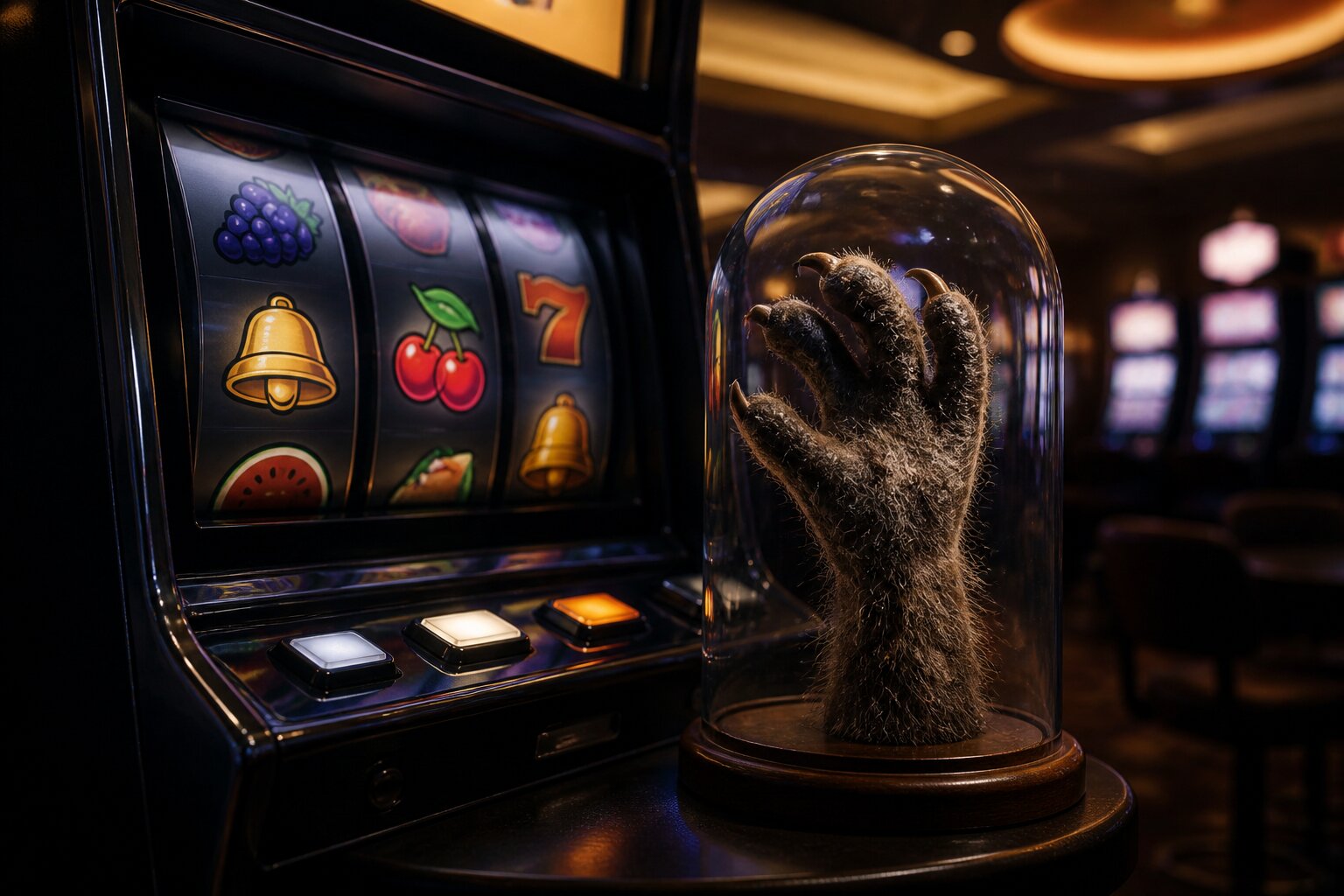
Ever wondered if there’s really a secret way to beat slot machines? Stories have swirled for years about gadgets and tricks that promise easy money, and few rumours are bigger than the one about the “monkey paw” tool. The idea of tricking a machine can be tempting when cash is involved, but it’s important to separate storytelling from reality.
This article explains what the monkey paw was, how it worked, and why it no longer poses a threat to modern machines. It also covers the legal and personal risks tied to attempting any kind of cheat, so you can judge for yourself why these tales belong in the past rather than in practice.
Read on to learn how the method worked and why security and the law now make attempts to tamper with machines both futile and dangerous.
What Is the Slot Machine Monkey Paw Tool Cheat?
The “monkey paw” was a small, improvised device used to tamper with older slot or fruit machines. Typically formed from a metal wire or spring bent into a hook, it could be concealed in a sleeve or pocket and fed into a coin chute or payout area. The aim was to manipulate a payout mechanism so the machine released coins without a legitimate win.
Accounts from pubs and arcades describe users slipping the tool into a coin return or a gap on the cabinet and nudging an internal lever or arm to trigger a release. That made it possible, in rare cases with vulnerable machines, to coax out coins that the machine would otherwise have kept.
This is a historical method rather than a present-day threat: modern machines and venue security have been upgraded to stop physical tampering. To understand why the monkey paw is now ineffective, the next section looks at exactly how the trick worked and what vulnerabilities it exploited.
How Does the Monkey Paw Method Work?
The technique relied on the physical architecture of older mechanical and early electronic machines. These machines had exposed or reachable mechanical parts connected to the payout system, and a narrow, flexible tool could access those parts through payment slots and chutes.
A user would bend a length of wire into a hooked shape slim enough to slip into the machine. While appearing to stand nearby or to be playing, they would insert the tool and manipulate it to move a lever, press a latch, or disturb a component that controlled the coin release. If that internal part moved in the wrong way, the machine could drop coins into the tray as if a winning combination had been achieved.
That approach depended on several conditions aligning: a machine with reachable components, lax supervision, and the operator’s ability to work undetected. Modern designs remove those conditions, with components shielded behind tamper-proof plates and sensors that detect intrusion. Having seen how the device was used, the next section separates the myths from the facts people still repeat today.
Myths vs Facts: Is the Monkey Paw Tool a Real Cheat?
Stories have amplified certain claims about the monkey paw, so it helps to be clear about what is true and what is not.
- Myth: It works on any slot machine. Fact: It only ever worked on particular older mechanical or early electronic machines with exposed mechanisms.
- Myth: It’s risk-free and simple. Fact: It required skill, timing and stealth, and those caught faced serious consequences.
- Myth: Cheating always went unnoticed. Fact: venues have long used staff and cameras to spot suspicious behaviour, and detection has commonly led to prosecution.
- Myth: The monkey paw is in general use today. Fact: modern anti-tamper measures, secure housings and monitoring make such manual tricks ineffective.
Understanding these facts explains why the monkey paw is now part of gambling lore rather than a current tactic. That context also helps show why the legal and personal risks of attempting such acts are so significant, which is the focus of the next section.
Risks of Using Slot Machine Cheating Devices
Attempting to tamper with a machine is likely to result in immediate and long-term consequences. Under UK law, interfering with slot machines can be prosecuted as fraud or theft, which carries the possibility of criminal charges, fines and a criminal record. Courts have handed down custodial sentences in some cases, and prosecutions can also lead to seizure of any proceeds obtained.
Beyond criminal penalties, venues respond directly: machines can be locked down, incident reports filed, and individuals banned from premises. Operators share information, which can make it difficult to access gambling services in future. There is also reputational damage to consider; being involved in a cheating case can affect work and personal relationships.
Operationally, modern machines detect tampering quickly and will void any suspected payout, so any attempt is likely to fail before yielding funds. With severe legal consequences and little realistic prospect of success, the risks make such attempts a very poor choice. The next section outlines the statutory framework that governs these offences.
Legal Issues Surrounding Slot Machine Cheats
Using devices to alter or force payouts is covered by several UK laws that protect fair play. The Gambling Act 2005 includes specific provisions that criminalise cheating at gambling and assisting others to cheat. The Fraud Act 2006 is also applicable where dishonesty is involved, and the Theft Act 1968 can be relevant if property is appropriated.
These laws are supported by regulatory oversight and by operators’ own rules and procedures. Casino and betting venue staff are trained to spot suspicious behaviour and to report it to the regulator and the police. Operators may also use surveillance, machine monitoring and technical safeguards to prevent tampering and to preserve evidence for any subsequent investigation.
Enforcement is carried out by a mix of organisations, including the police, the Gambling Commission and local authorities. Where a crime is suspected, the police can seize equipment, interview witnesses and refer cases for prosecution. The Gambling Commission can pursue regulatory action against licensed operators who fail to maintain secure systems, and it can impose its own sanctions where appropriate.
What Laws Cover Slot Machine Cheating in the UK?
Gambling Act 2005 (particularly Section 42)
Fraud Act 2006
Theft Act 1968 (where theft is involved)
These statutes give operators and enforcement agencies the tools to investigate, prosecute and sanction offenders, and they underpin the industry’s duty to maintain secure, compliant premises and devices. Civil remedies, such as claims for damages or compensation, can also arise where losses are caused by cheating, and insurers may be involved in some cases. Following on from the legal framework, the next part summarises typical penalties for those found guilty.
What Are the Penalties for Getting Caught?
Unlimited fines, depending on the seriousness of the offence
Up to two years’ imprisonment for cheating under the Gambling Act 2005
Permanent exclusion from gambling venues and online services
Seizure and forfeiture of any winnings or proceeds
Disclosure of offences to potential employers, affecting future job prospects
Penalties vary with the facts of each case, including whether the conduct involved organised activity, the value of any gains and whether other offences such as theft or fraud are proved. In addition to criminal penalties, successful prosecutions can lead to travel restrictions, difficulties in obtaining professional licences and long-term damage to personal reputation.
Operators may also seek civil orders or injunctive relief to prevent further misconduct and to recover losses. Machines and devices used in offences are commonly seized and destroyed, and courts can order the confiscation of assets linked to criminal behaviour. With the laws and penalties clear, the following section explains whether attempts to use monkey paw devices can still succeed in modern venues.
Can You Still Find Monkey Paw Devices in Modern Casinos?
In licensed UK venues, the environment has been hardened against the sorts of vulnerabilities the monkey paw exploited. Contemporary machines use sealed cabinets, internal tamper sensors, encrypted software and mechanisms protected by secure plates. Operators run regular audits, and their security teams use high-definition CCTV and analytics to identify suspicious patterns.
There are no credible reports of such a device being used successfully in reputable, licensed premises in recent years. Even if someone attempted it, the layered protections and active supervision make detection and rapid response likely, leading to swift enforcement action.
Operators are obligated to protect both machines and customers, cooperating with regulators and local authorities to address any attempt to cheat. The following final section draws the practical and legal threads together and offers a concise takeaway.
The Bottom Line: Cheating Never Pays
Attempts to cheat slot machines with devices such as the monkey paw belong to gambling history rather than present practice. Even where older machines once showed vulnerability, advances in machine design and venue security have closed those gaps and made tampering impractical and dangerous.
The penalties for attempting to interfere with machines are severe, and the operational safeguards in place mean detection is probable. For anyone concerned about gambling behaviour or the pressures that lead to risky choices, support and self-exclusion options exist to help manage play responsibly.
Play within the rules and the law, and you avoid the legal, financial and personal consequences that follow attempts to subvert gaming equipment. That is the only reliable way to protect yourself and the integrity of the industry.
**The information provided in this blog is intended for educational purposes and should not be construed as betting advice or a guarantee of success. Always gamble responsibly.