
Ever wondered if there’s more to roulette than the stories you hear around the table? Do the familiar tips and betting patterns people swear by actually affect the outcome, or are they just part of the game’s folklore?
Many players hope for a reliable method to turn a profit. This article cuts through those ideas to explain how the wheel, the bets and the numbers really work, so you can play with a clear picture of what to expect.
Whether you’re new to roulette or you’ve played many times, the following sections unpack the mechanics, the maths and the common misconceptions so you can make informed choices and enjoy the experience.
How Does the Roulette Wheel Really Work?
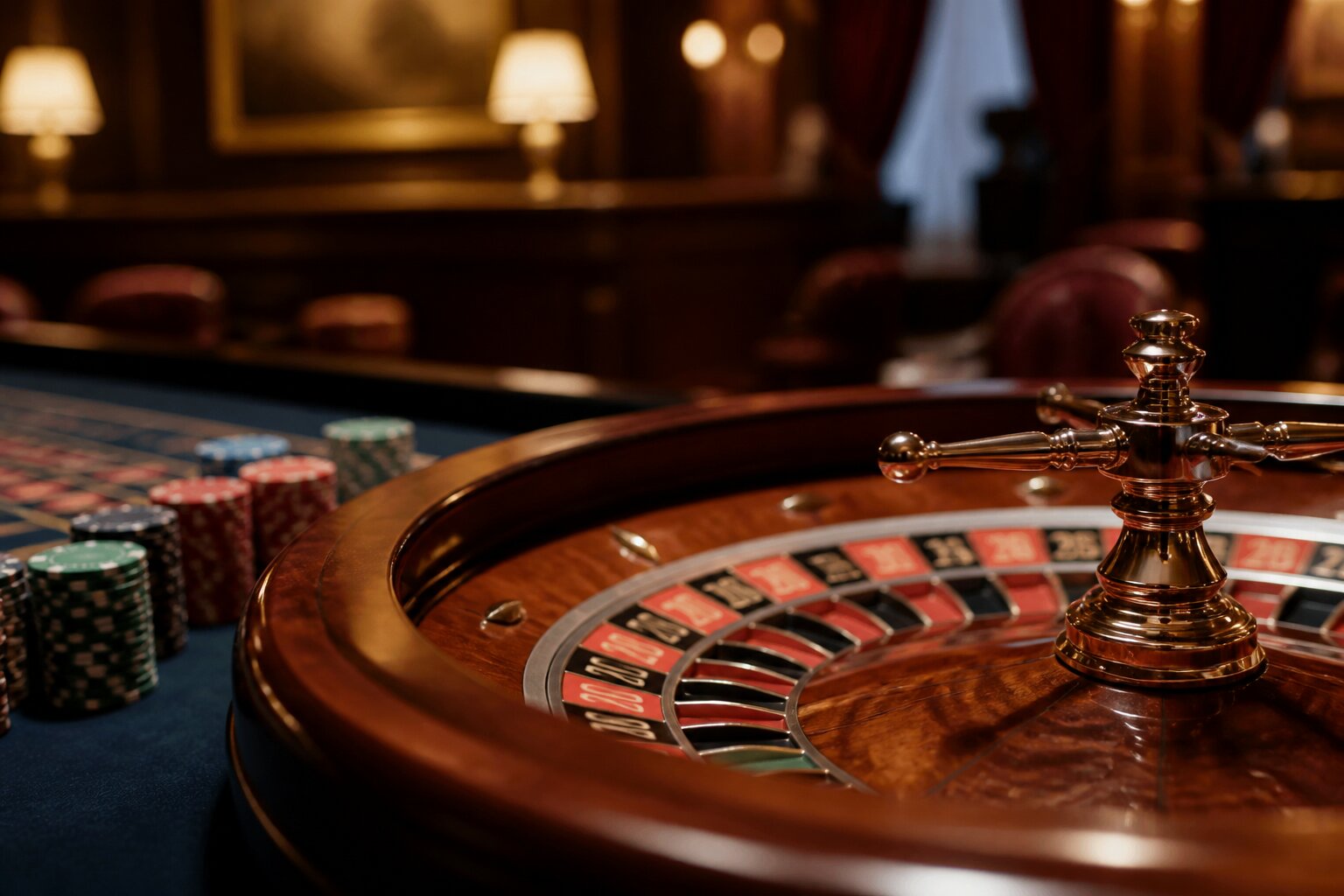
A roulette wheel is straightforward in design but precise in operation. Each wheel contains numbered pockets—37 on a European wheel and 38 on an American wheel. The numbers alternate colours (red and black), with one or two green zeros depending on the version. The layout is fixed, and each pocket is identical in size and shape.
When the wheel is spun and the ball released, factors such as wheel speed, ball speed, friction and gravity determine where the ball comes to rest. Those physical influences make each spin unpredictable; nothing in the game links one spin to the next. The house edge arises from the presence of the green zero pocket(s): payouts are set slightly lower than the true mathematical odds so the game yields a long-term advantage to the house.
Understanding this mechanical and mathematical basis helps explain why strategies that claim to “beat the wheel” cannot change the underlying probabilities.
What Are the Main Differences Between European and American Roulette?
The primary difference is the number of pockets. European roulette uses a single zero and therefore 37 pockets in total. American roulette adds a double zero, making 38 pockets. That extra pocket alters the probabilities for all bets and increases the house edge.
Although most betting options and table layouts look similar, that additional double zero raises the house edge from roughly 2.7% to about 5.3%. In practical terms, this means the expected long-term return to players is lower on the American wheel. Players who prefer lower house margins typically favour the single-zero layout for that reason.
Knowing this distinction can shape sensible choices about which game to play, depending on whether you prioritise slightly better mathematical odds or other game features.
Are Casino Roulette Tables Truly Random?
Casinos take measures to ensure each spin is unpredictable. In physical venues the wheels are maintained and inspected to avoid mechanical bias. In digital games, random number generator (RNG) software produces outcomes; reputable suppliers submit RNGs to independent testing labs for certification to confirm they behave as intended.
These safeguards aim to make spins independent of each other and free from predictable patterns. That said, “independent” testing and routine maintenance do not change the core fact that every spin is an isolated event governed by probability. Past results convey no reliable information about what will happen next.
If you’re curious whether a particular wheel has an irregularity, venues will usually have audit and quality-control records that show the checks performed.
What Are the Most Common Myths About Winning at Roulette?
Roulette has accumulated a lot of myth and habit. Players often believe that certain numbers are “due”, that particular bet sequences will guarantee wins, or that subtle changes in betting can overcome the house edge. These ideas persist because they offer a feeling of control, but they do not alter the mathematical reality of each spin.
Some myths come from misunderstanding probability; others come from misapplying patterns seen over a short sample of spins. Distinguishing entertaining superstition from mathematically grounded information helps players stay realistic about what to expect from the game.
If you find a routine that makes playing more enjoyable without risking more than you can afford, that’s reasonable — but it’s important to keep expectations aligned with how the game actually behaves.
Do Betting Systems Actually Improve Your Odds?
Many well-known betting systems—like Martingale, Fibonacci or D’Alembert—focus on how bets are sized and adjusted after wins or losses. They can give a clearer structure to your play and may change the short-term distribution of results, but they cannot change the underlying probabilities of each spin or remove the house edge.
Systems that increase stakes after losses can also increase exposure to large losses and to table limits that prevent recovery. In other words, while these approaches can affect how you experience streaks, they do not improve long-term expected returns.
How Do Roulette Odds Affect Your Chances of Winning?
Each betting option corresponds to a specific probability determined by the number of pockets on the wheel. A single-number (straight) bet on a European wheel has a 1 in 37 probability; on an American wheel it is 1 in 38. Bets covering more numbers increase the chance of a pay-out but reduce the payout ratio accordingly.
Even-money bets (red/black, odd/even, high/low) come close to a 50% chance on their face, but the zero(s) mean they are slightly less than true evens. Higher-payout bets compensate for lower probability by offering larger returns, while lower-payout bets compensate with higher probabilities.
Knowing these relationships lets you pick bet types that match your preferences—whether you favour less frequent, larger payouts or more frequent, smaller ones—while keeping in mind the game’s built-in house margin.
What Are the Typical House Edge Secrets Casinos Don’t Share?
The house edge is not a secret so much as a basic feature of the game’s maths. It represents the long-term advantage that arises because payouts are set slightly lower than the true odds. The single-zero design yields a lower edge than the double-zero design precisely because there is one fewer losing pocket.
In practice, the house edge affects expected returns over many spins rather than outcomes in any individual session. Players may win or lose in the short term, but over time the edge determines the average outcome. Understanding that distinction—between individual sessions and long-term expectation—helps set realistic goals for play.
Can You Spot Patterns in Roulette Results?
Tracking outcomes can be entertaining and may reveal short runs of the same colour or number group, but those sequences are the sort of variation expected from random processes. Since each spin is independent, past outcomes do not predict future ones.
Occasional runs or clusters are a normal part of randomness and can even feel striking compared with everyday expectations. Recognising that such patterns are natural rather than meaningful reduces the temptation to change betting behaviour based on perceived trends.
If the act of recording results adds to your enjoyment, it’s a harmless pastime — just avoid treating it as a decision-making tool.
What Factors Influence Roulette Payouts?
Payouts correspond to the probability a bet will win. A straight-up number bet pays 35 to 1, reflecting the low probability of hitting a specific pocket. Bets that cover two, three or more numbers pay proportionally less. Even-money bets pay 1 to 1 because they cover roughly half the wheel minus the zero(s).
Casinos set these payout ratios so the total expected value of all bets is negative for players by the amount of the house edge. That structure is consistent across versions of roulette, but small differences in layout and rule variants can alter exact probabilities and therefore the value of particular bets.
Understanding how payout ratios relate to probabilities helps you choose bets that fit your appetite for risk and reward.
Responsible Gaming: What Should Every Player Know Before Playing Roulette?
Playing roulette should be a controlled, conscious choice. Setting clear financial and time boundaries beforehand helps maintain a positive experience. Practical tools such as deposit limits, time reminders and the option to take breaks are widely available and can be effective at preventing play from becoming problematic.
It is also helpful to be aware of personal warning signs, such as difficulty stopping, chasing losses or using gambling to cope with stress. If any of those arise, taking a break and seeking support from professional resources is the sensible next step.
Operators provide tools and support for players who need them; using those resources when play starts to feel out of balance is a responsible step that protects both enjoyment and wellbeing.
Read on and use the information here to make clearer choices at the table—understanding the maths and mechanics of roulette gives you a firmer basis for how you play and what to expect.
**The information provided in this blog is intended for educational purposes and should not be construed as betting advice or a guarantee of success. Always gamble responsibly.