
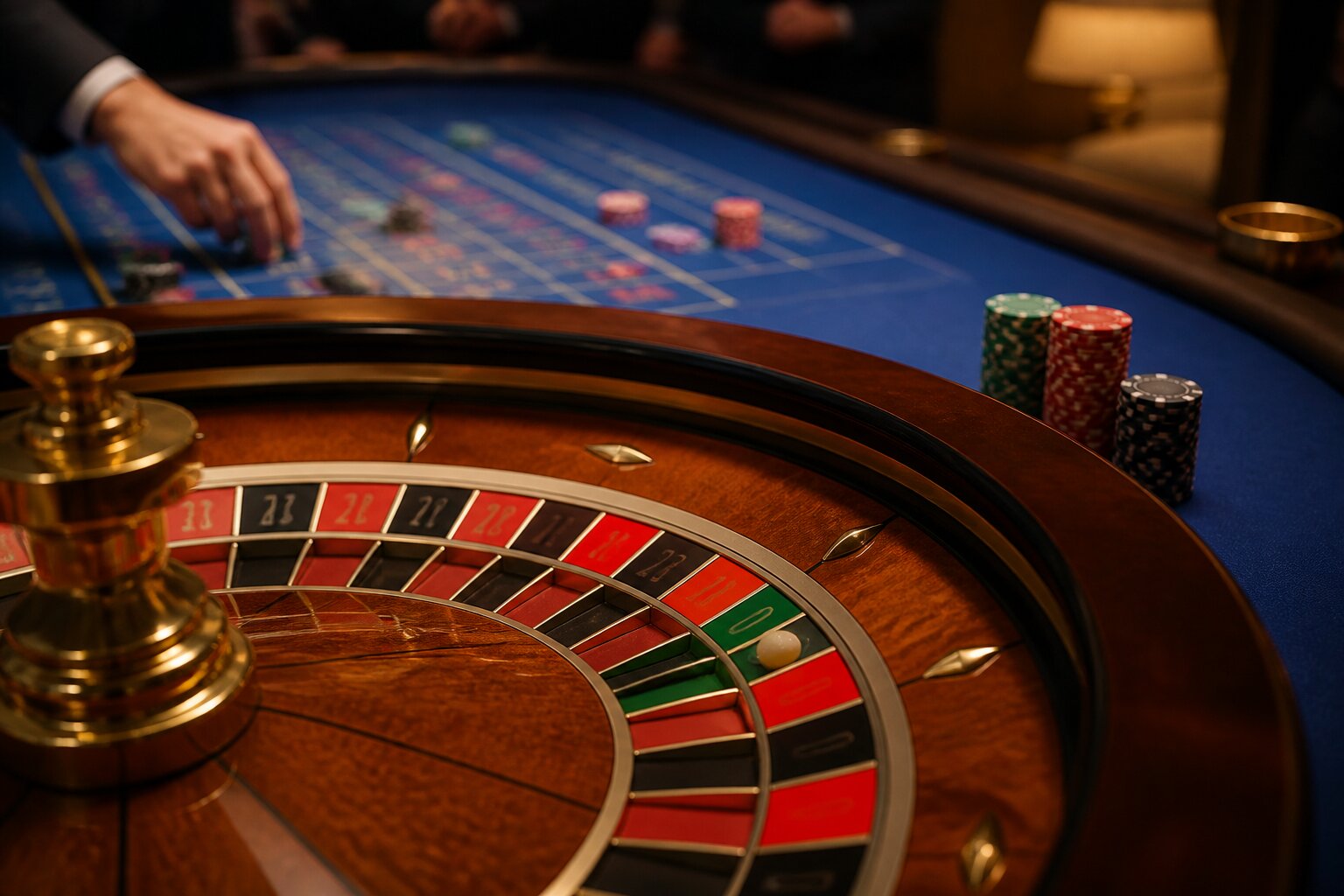
Ever wondered what happens when the ball lands on 0 or 00 in roulette? These green pockets are more than decoration — they change how the game plays and affect your chances on many bets.
Whether you play occasionally or visit the tables often, knowing how zeroes work helps you make clearer decisions. Read on to see what payouts to expect, how the odds differ between wheel types, and what the presence of zeroes means for the house edge.
What Are 0 and 00 in Roulette?
On a roulette wheel, 0 (zero) and 00 (double zero) are green pockets separate from the red and black numbers. European wheels have a single 0; American wheels include both 0 and 00. Because these pockets are neither red nor black and are not odd or even, they affect many outside bets — those bets fail when the ball lands on a zero.
You can place a straight-up bet on these numbers, or include them in bets that touch neighbouring pockets on the layout. Their role is straightforward but important: they change the total number of possible outcomes on each spin, which in turn shapes the odds and the casino’s advantage.
Understanding Payouts for 0 and 00
A straight-up bet on 0 or 00 pays 35 to 1. That means a winning bet returns 35 times the stake plus the original stake. This payout applies to any single-number bet on the wheel.
There are also split bets that include zeroes. If you place a chip on the line between 0 (or 00) and an adjacent number, that split pays 17 to 1. These alternative bets reduce the payout but increase the chance of covering one of the pockets on a given spin.
It’s worth noting that payouts are standardised across single-number bets; what differs between wheel types is the number of pockets and therefore the true probability of hitting a winning number.
What Are the Odds of Hitting 0 or 00?
The chance of the ball landing on 0 or 00 depends on the wheel.
- On a European wheel there are 37 pockets (1–36 plus a single 0). That gives a 1 in 37 chance, about 2.70%, for 0 on each spin.
- On an American wheel there are 38 pockets (1–36, 0 and 00). Each zero pocket has a 1 in 38 chance, around 2.63%, on any spin.
You can also look at the combined chance of landing on any zero pocket. On a European wheel the only zero is 0, so the combined chance is the same as above. On an American wheel the chance of hitting either 0 or 00 on a single spin is 2 in 38, about 5.26%.
These percentages explain why the extra 00 on American wheels has a practical effect: it increases the proportion of spins that land on a zero pocket and so affects the long-term expected return to players. For example, the commonly quoted house edge figures reflect this difference: European single-zero roulette is generally cited at around 2.70%, while American double-zero roulette is commonly cited at around 5.26%.
Comparing European and American Roulette Zeroes
The main difference between the two versions is the number of zeroes on the wheel. European wheels use a single 0, while American wheels use both 0 and 00. That extra pocket increases the total number of possible outcomes and therefore alters the expected return on many bets.
In practical terms, the single zero keeps the house advantage smaller. With two zeroes, a greater proportion of spins land on a non-numbered pocket, which defeats many outside bets and raises the casino’s margin.
While the basic rules and bet types remain the same across both versions, the extra pocket shifts the statistical balance. Payouts for winning bets are identical in nominal terms, but the probability of winning is lower on an American wheel because of the extra pocket. This means the effective return to the player is reduced even though the pay tables do not change.
To summarise the key effects:
- European roulette typically offers a lower house edge because there is only one zero.
- American roulette has a higher house edge because of the additional 00 pocket.
- Payouts stay the same in both games, but the chance of winning each payout is slightly lower on the American wheel.
Those differences make European roulette generally preferable from a player perspective when both options are available. However, game availability and player preference may still lead some people to choose American roulette.
Why Are Payouts Different for 0 and 00?
- House Edge Explained
Payouts for single-number wins are the same across the wheel, but the chance of hitting any single number is lower when there are more pockets. That gap between payout and probability is the house edge: the mathematical advantage the casino holds over time.
House Edge Explained
On a European wheel there are 37 pockets, so a straight-up single-number bet has a probability of 1 in 37, or about 2.70%. Payouts for that bet are still made at 35 to 1, which is the same level of prize as if there were only 36 pockets. The difference between the true probability and the implied probability from the payout produces an average loss to the player of about 2.7% over many spins.
On an American wheel there are 38 pockets, which makes the probability of a single-number hit 1 in 38, or about 2.63%. Because the payout remains 35 to 1, the gap between payout and chance is larger, producing a house edge of roughly 5.26%. In practical terms, this means that for every £100 wagered repeatedly on single numbers, the expected long-term loss is higher on the American wheel than on the European wheel.
Understanding the house edge helps explain long-term outcomes without implying short-term results are predictable. It is a statistical feature built into the game’s structure and does not guarantee any particular result in a single session.
What Happens if You Bet on 0 or 00?
When you place chips directly on 0 or 00 and the ball lands on that pocket, the dealer or software pays the straight-up win at 35 to 1 and returns your stake. Winnings are settled before the next round begins, so you will see your credited amount immediately once the outcome is confirmed.
If the spin lands on any other number, the bet is lost in the same way as any other single-number wager. Lost bets are removed from the table or cleared from your account balance before play continues.
Which zero pockets appear depends on the game type. European and French roulette have a single zero (0), while American roulette has both a single zero and a double zero (0 and 00). The payout for a successful straight-up bet is the same regardless of whether the table has one or two zero pockets, but the number of pockets in play affects the frequency of wins.
You can place individual chips on 0 and on 00 if both are present, treating them as separate single-number bets. Remember that the house margin differs between game types, so the presence of an extra zero changes the statistical odds even though the nominal payout for a straight-up win remains 35 to 1.
Common Myths About Winning on Zeroes
Several misconceptions circulate about zeroes. One is that a number is “due” to appear after a dry spell. Each spin is independent; previous outcomes do not change the probability on the next spin. Another is that systems or patterns can reliably predict zeroes. No betting system can overcome the built-in house edge or guarantee consistent wins.
A final myth is that betting on zeroes extends bankroll longevity. While betting styles can alter variance, they do not change the expected return determined by the payout structure and wheel composition. Keeping expectations grounded in the maths of the game is the best way to avoid disappointment.
Key Takeaways on Zero Bets in Roulette
Zero bets carry the same straight-up payout as other single numbers, but the number of zero pockets affects the probability of winning and the house edge. European wheels with a single 0 offer a slightly better expected return than American wheels with both 0 and 00. Split bets that include a zero reduce payouts but increase coverage on the layout.
Remember that the house edge is a long-term statistical feature; outcomes on individual spins are independent. Play within limits, set budgets and time boundaries, and treat the game as entertainment rather than a means to achieve a financial goal.
If you’re ready to try different tables, choose the wheel type that suits your approach and keep your play measured. Enjoy the game, stay aware of the maths behind it, and make choices that fit how you like to play.
**The information provided in this blog is intended for educational purposes and should not be construed as betting advice or a guarantee of success. Always gamble responsibly.