
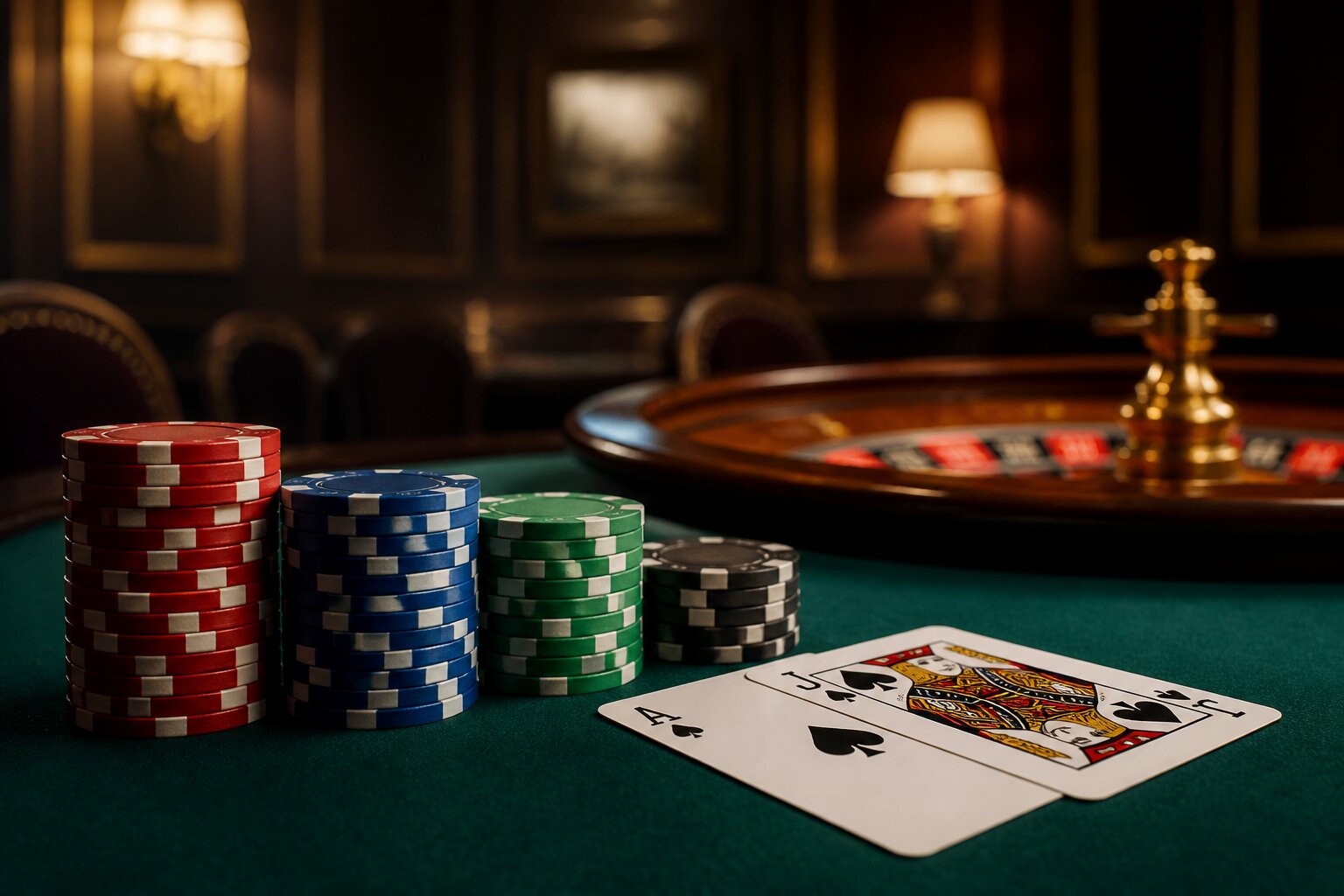
Ever wondered why you sometimes lose faster at some casino games than others? The answer is the house edge — the small percentage the casino retains from each bet over time.
Not all games carry the same edge. Some let your stakes stretch further and give you a better chance of walking away with more than you started. Read on to find out which games offer the fairest odds and how to make more informed choices without changing the fun.
What Is House Edge & Why Does It Matter?
House edge is the long-run percentage of every stake the casino expects to keep. It does not predict a single session’s outcome, but it does shape what happens after many bets are placed.
For example, a 2% house edge means the casino would expect to keep about £2 for every £100 wagered over time. That does not mean you will lose £2 each time you play, but it helps explain why some games drain your balance quicker than others.
Understanding house edge helps you pick games that give better value for your money. It also clarifies why strategy matters in some games but has little effect in others: where decisions influence the outcome, you can reduce the effective edge; where outcomes are fixed by the rules, the edge stays the same regardless of play style.
Which Casino Games Have The Lowest House Edge?
Some games consistently offer lower house edges, so your money tends to last longer when you choose them carefully.
Blackjack is often the best option for players who learn basic strategy. With favourable rules, the house edge can fall to around 0.5%. Small changes in rules — number of decks, dealer hitting on soft 17, or payout for blackjack — will alter that figure, so it pays to check the specific table rules.
Baccarat is simple and straightforward. The banker bet is usually the lowest edge on the table, commonly close to 1.06%, while the player bet is slightly higher. Avoid the tie bet as it carries a far larger edge and poorer value.
American roulette’s extra double zero increases the house advantage significantly.
Craps offers a mix of bets; the pass and don’t pass bets are among the better options, often below 1.5% house edge. The key with craps is choosing the lower-edge bets rather than the more tempting, higher-priced propositions.
Comparing Odds: Table Games vs Slot Machines
Table games and slot machines suit different tastes, but they also differ in how favourable their odds are.
Table games such as blackjack, baccarat and certain roulette bets generally provide lower house edges. These games can reward knowledge and strategy, which means players who understand the rules and choices can improve their expected return.
Slot machines typically carry higher house edges, often ranging from around 3% up to 10% or more depending on the game and its paytable. Jackpot slots can offer large potential payouts but at the cost of lower long-term returns. If you want better value, look at the paytable and volatility information before you play to understand how often the game pays and how large those wins might be.
Each spin or hand is independent and governed by the game’s rules and return rate. Knowing the differences in house edge between tables and slots helps you match your play to your goals — whether that is stretching a bankroll or chasing a big payout.
Are There Myths About Low House Edge Casino Games?
There are several persistent misunderstandings about low house edge games that can lead to poor decisions.
One myth is that a low house edge guarantees you will win. In truth, the edge only describes the long-term trend. Short sessions can produce any result. Another misconception is that a betting system can remove the house edge. Systems may change bet sizes, but they do not alter the underlying mathematics of the game.
People also sometimes think past outcomes affect future ones. In games that use independent events, like spins or hands, previous results do not influence the next outcome. The most reliable way to improve your experience is to learn the rules and strategies that genuinely affect the odds, such as basic strategy in blackjack or choosing lower-edge bets in craps.
How To Identify Favourable Odds Before You Play
Checking a game’s return characteristics before playing gives you a clearer idea of its value.
Start by looking for a game’s paytable or rules section; reputable operators and review sites usually publish return-to-player figures and rule variants. Pay attention to rule differences that matter — for instance, blackjack payouts, number of decks or roulette wheel type — because these change the house edge.
Where possible, compare similar games to see which offers the better terms. If a slot’s paytable shows low frequencies for high payouts, it may be more volatile and less suitable for preserving a balance. For table games, study the options and choose bets with the lowest built-in edge.
Set personal spending limits before you start and stick to them. That way you control how much you risk and make decisions based on the odds rather than on emotion.
Choosing The Right Game For Your Casino Experience
The best game is the one that fits both your budget and how you like to play. House edge is only one factor; enjoyment, session length and how much interaction you want also matter.
Consider What You Enjoy Most
Think about whether you prefer social, decision-driven tables or the quicker rhythm of slot play. Table games reward learning and deliberation, while slots are simple and offer many themed experiences. Match the game to how involved you want to be.
Make Use of Responsible Gambling Tools
Operators provide tools to help you manage play. Options such as deposit limits, session reminders and time-out features are there to keep play within whatever boundaries you set for yourself. Using these tools can make your experience more predictable and comfortable.
Balance Odds With Enjoyment
Choosing games with a lower house edge can help your money last, but it should not come at the cost of fun. If a particular game keeps you engaged while you maintain sensible limits, you have found a reasonable balance between value and enjoyment.
If you would like support with responsible play, help and guidance are available through the site and recognised organisations. Your well-being is the priority, and using the tools on offer helps you keep control.
In the end, understanding house edge and choosing games that match your goals lets you play with clearer expectations and more control over your experience.
**The information provided in this blog is intended for educational purposes and should not be construed as betting advice or a guarantee of success. Always gamble responsibly.